
With the right system, an absolute beginner can read real Arabic words and full sentences in about two weeks, studying one hour a day. A basic conversation usually takes one to two months. That is far faster than most people expect, and it is what we see every day at arabicy.com. The difference is not talent. It is method, feedback, and tools built specifically for how Arabic works.
This guide explains realistic timelines for each stage, why so many learners take years to get nowhere, and how the arabicy.com approach shortens the journey.
Why most people take years to learn Arabic
After many years teaching Arabic both offline and online, I can say the most common reason learners stall is simple: they have no systematic, academic path.
They pick up words here and there, often from friends, apps, or videos. Along the way they learn vowels incorrectly and never find out. Nobody tells them how often they mispronounce a sound the first time, or how the mouth and throat actually produce each letter. Without that feedback, mistakes become habits, and habits take months to undo.
The result is a learner who knows a few phrases but still cannot read a sign, a menu, or a sentence.
A realistic timeline for learning Arabic
Every learner is different, but with a structured method and about one hour of study a day, these are the milestones we see at arabicy.com.
Weeks 1 to 2: the alphabet, the vowels, and your first sentences
In the first two weeks, learners master the Arabic alphabet and the vowels, and begin spelling and reading words on their own. By the end of week two, most can read a whole sentence.
This is possible because of a feature of Arabic many beginners do not know: what you see is what you read, and what you read is what you speak. Once you know the letters and the vowel marks, written Arabic becomes predictable. There are very few surprises.
Weeks 2 to 3: reading real Arabic
With reading in place, learners move quickly from practice words to real texts. Some of our learners begin reading newspaper headlines and short articles within two to three weeks.
Months 1 to 2: holding a basic conversation
Speaking takes a little longer than reading, because it adds listening, timing, and confidence. Most arabicy.com learners can hold a basic conversation within one to two months.
Beyond the basics: grammar, vocabulary, and confidence
From there, progress depends on how consistently you keep practising. Because every arabicy.com lesson includes grammar and vocabulary alongside dialogue, learners keep building all of their skills together instead of hitting a wall later.
How arabicy.com speeds up learning Arabic
The timelines above are not typical of self-study. They come from tools and a lesson structure designed specifically for Arabic. You can see every tool in action on the arabicy.com features page.
The Arabic Speller: learn to read and pronounce any word
The Arabic Speller is a tool developed by arabicy.com that teaches learners how to read and say a word by building it step by step. It adds the letters and the vowels one at a time, so the learner hears and sees how each piece changes the sound, until they reach the full pronunciation of the final word.
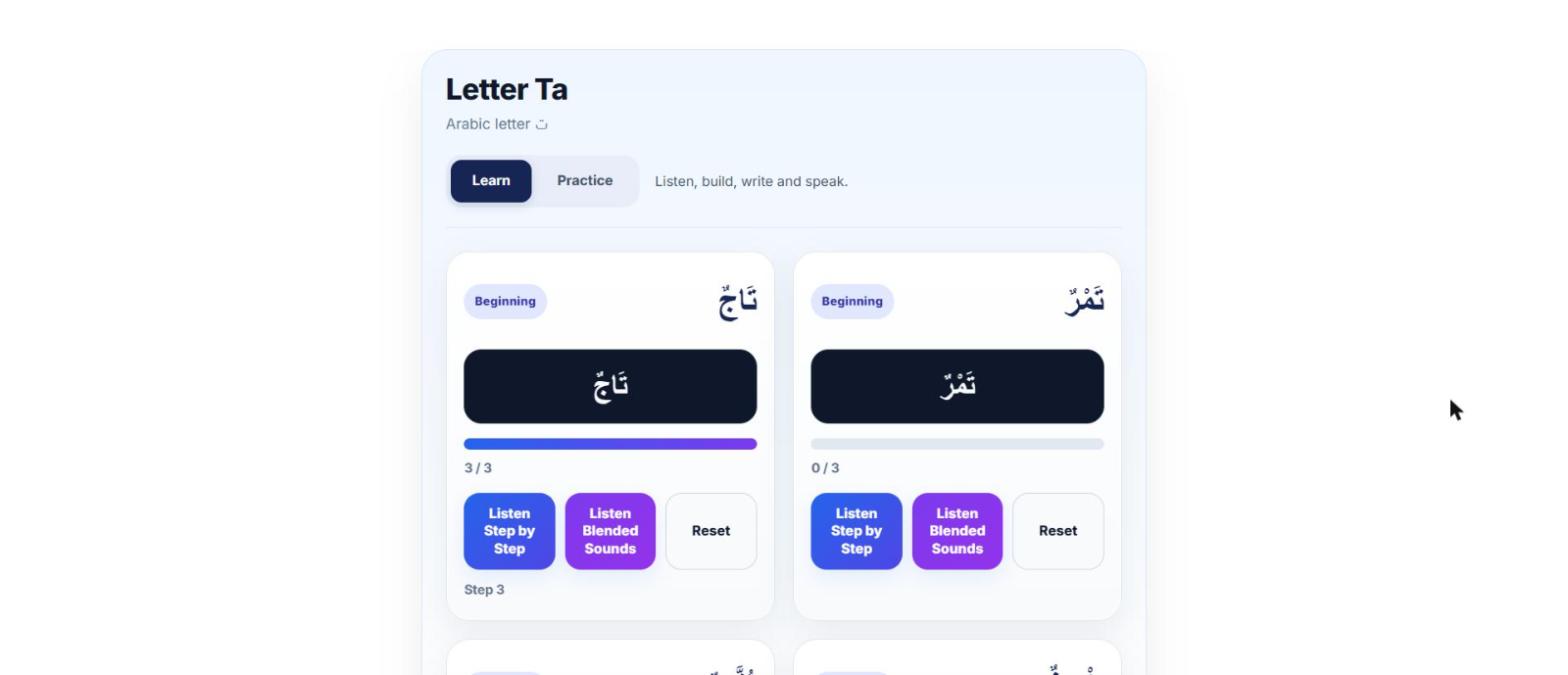
The Speller is AI-based and designed to make learners independent, so they do not need outside resources to work out how a word sounds. A paper has been written about the method, and it is currently in the process of being patented. You will not find it anywhere else.
The Dialogue Tool: instant feedback on your speaking
Speaking practice is where most learners need help the most, and where they usually get the least. The arabicy.com Dialogue Tool teaches learners to speak Arabic and gives a score for every word and every sentence they say.
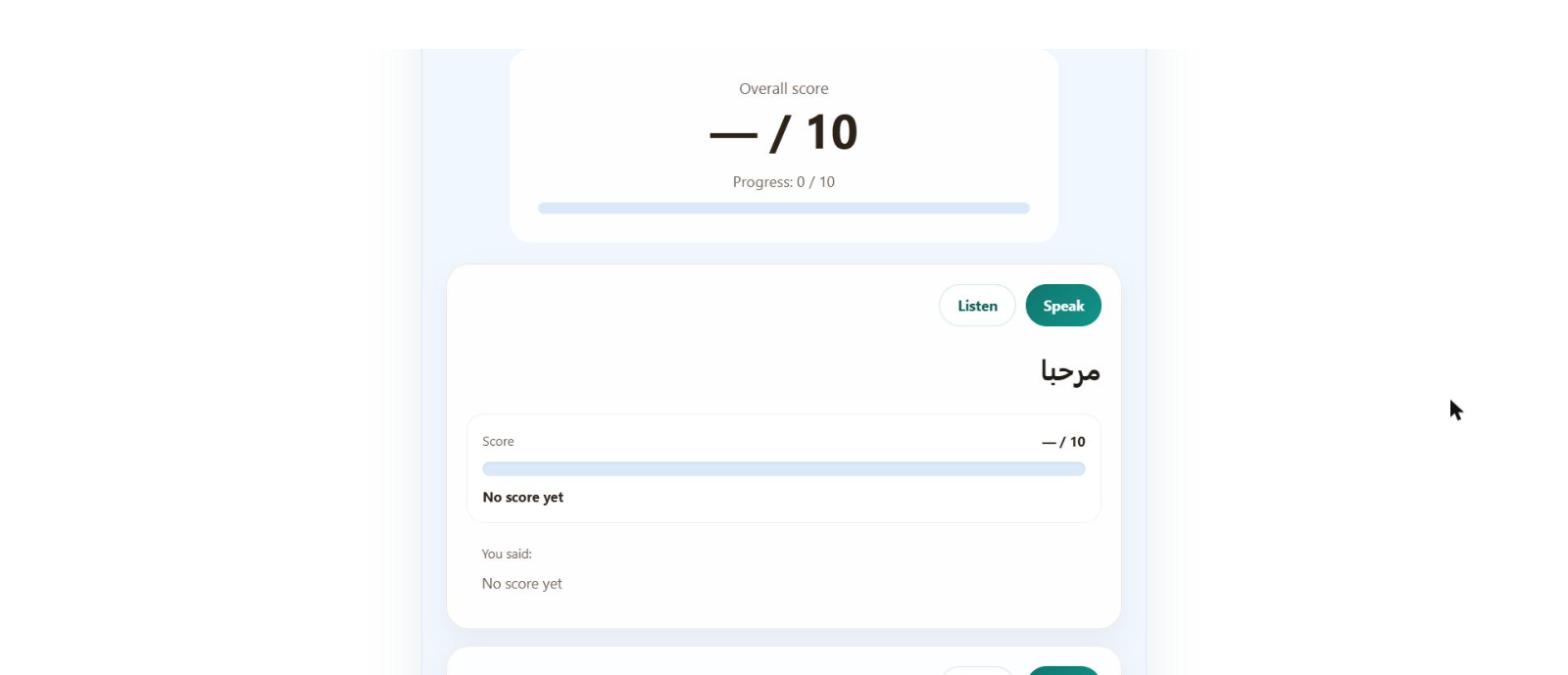
That score turns practice into progress. Instead of guessing whether they sounded right, learners can see exactly what to improve and work on it themselves.
Feedback from day one
Because the tools give direct machine feedback, learners find out about their mistakes from the very first lessons. They learn how each sound is made in the mouth and throat, catch errors early, and fix them before they become habits.
Every lesson builds four skills
Each arabicy.com lesson follows the same structure, so no skill is left behind:
- Reading and writing: the letter or topic of the lesson, practised in context.
- Dialogue: a short, real conversation to listen to and repeat.
- Grammar: one clear rule, built on the one before it.
- Vocabulary: useful terms around a single subject, so new words stick together.
A real example: from three years of struggle to reading the news
One learner came to arabicy.com after two to three years of trying to learn Arabic on her own. She had picked up some words and a few sentences from her partner, who speaks Arabic, but she still struggled with the alphabet and could not read or write.
Once she started learning with a clear system, the difference was immediate. Within two to three weeks she could read and write with confidence, and she began reading Arabic newspapers.
Her story is common. The problem was never her ability. It was the lack of a method.
How much should you study each week?
You do not need to study for hours. One focused hour a day is enough to reach the reading milestone in about two weeks.
Consistency matters more than intensity. A daily hour with clear feedback will take you further than a long session once a week. If your schedule is tight, keep the habit going with shorter daily sessions rather than skipping days.
Frequently asked questions
Can I really read Arabic in two weeks?
Yes. With one hour of study a day and a structured method, most arabicy.com learners can read the alphabet, the vowels, and whole sentences within about two weeks.
How long until I can speak Arabic?
Most learners reach a basic conversation in one to two months. Regular speaking practice with feedback, like the scored exercises in the arabicy.com Dialogue Tool, makes the biggest difference.
Why is reading Arabic faster to learn than people expect?
In Arabic, what you see is what you read. Once you know the letters and the vowel marks, words are pronounced the way they are written, so reading becomes predictable very quickly.
Do I need a teacher to fix my pronunciation?
You need feedback. At arabicy.com that feedback is built in: the tools score each word and sentence you say, so you can find and correct mistakes yourself from the start.
Start learning Arabic today
The fastest way to find out how quickly you can learn Arabic is to try it. Start with the free alphabet course on arabicy.com, give it one hour a day, and see how far you get in two weeks.
Start the free Arabic alphabet course
Ready for the full program, with every lesson, the Speller and the Dialogue Tool? Compare the arabicy.com plans and pricing and choose the one that fits your schedule.