
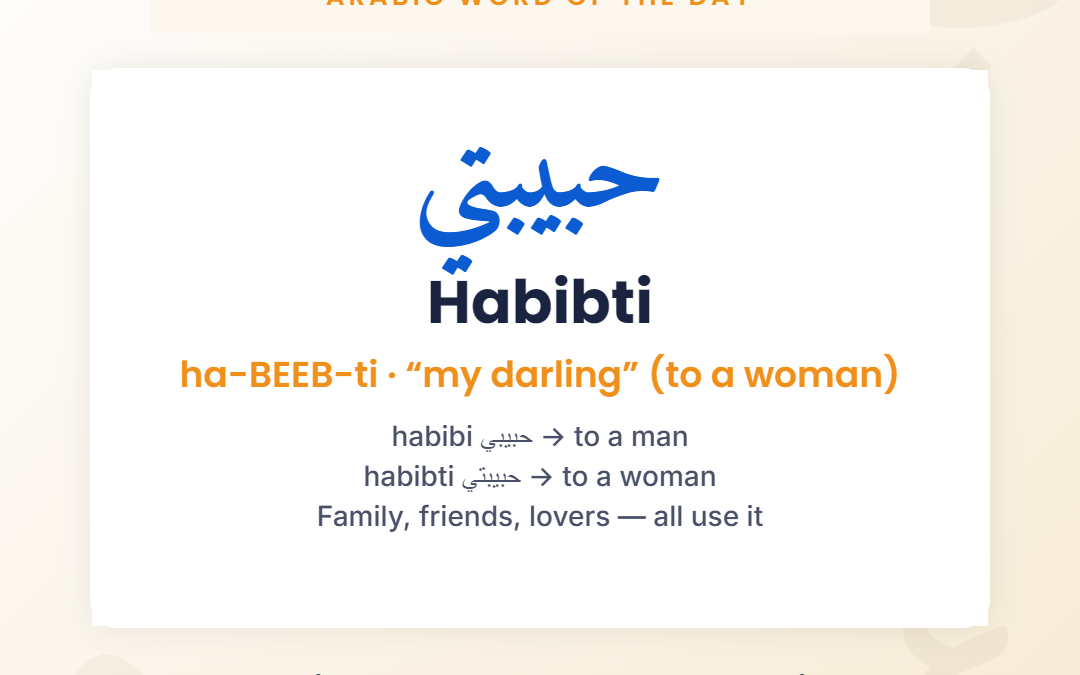
Habibti حبيبتي means “my darling,” “my love,” or “my dear” — said to a woman or girl. It is pronounced ha-BEEB-ti. Habibi حبيبي is the same word said to a man. Both come from ḥubb حُبّ, the Arabic word for love.
That is the short answer. The longer one is more interesting: in Arabic, habibti is not reserved for romance. A mother says it to her daughter, a grandfather to his granddaughter, a friend to a friend, a shopkeeper to a customer. The meaning stretches from “sweetheart” to a warm “dear” depending on who is talking.
Habibi vs habibti: the only rule you need
| Arabic | Say it | Use it for |
|---|---|---|
| حبيبي | habibi | a man or boy — “my darling (m.)” |
| حبيبتي | habibti | a woman or girl — “my darling (f.)” |
| يا حبيبتي | ya habibti | calling out to her: “oh my dear!” |
| حبايبي | habaybi | “my loved ones” — a group |
The difference is one letter: the -t- (the feminine tāʾ ت) before the final -i, which means “my.” So habib = darling, habib-i = my darling, habib-t-i = my darling (female). Once you see that pattern, hundreds of Arabic words open up: ṣadīqī / ṣadīqatī (my friend m./f.), ustādhī / ustādhatī (my teacher m./f.).
What habibti really means in context
- Romantic: a husband to his wife, a boyfriend to his girlfriend. “Good night, habibti.”
- Family: parents to a daughter at any age — a 60-year-old woman is still habibti to her mother.
- Friendship: women call each other habibti constantly. It is closer to “hun” or “babe” between friends than to a love declaration.
- Everyday politeness: in Egypt and the Levant a waiter or a taxi driver may call a female customer habibti. It is friendly, not flirtatious — though a stranger using it too freely can sound overfamiliar.
Is habibti romantic or just friendly?
Both, and the tone tells you which. Said softly, one-to-one, by someone you are dating: romantic. Said quickly at the end of a sentence by a friend, an aunt, or a shop owner: friendly. If you are a learner, the safe move is to use it with close friends and family first, and let Arabic speakers use it with you before you use it with people you barely know.
Warm words that go with habibti
| Arabic | Say it | Meaning |
|---|---|---|
| حياتي | ḥayāti | “my life” |
| روحي | rūḥi | “my soul” |
| عيوني | ʿuyūni | “my eyes” — very affectionate |
| قلبي | qalbi | “my heart” |
| عمري | ʿumri | “my whole life” |
| حبيبتي الغالية | habibti al-ghāliya | “my precious darling” |
A short real-life dialogue
Mother: صباح الخير يا حبيبتي، نمتي منيح؟ — Sabah al-khair ya habibti, nimti mnīḥ? — Good morning, my dear, did you sleep well?
Daughter: الحمد لله يا ماما — Alhamdulillah ya mama. — Thank God, Mom.
Mother: يلا حبيبتي، الفطور جاهز — Yalla habibti, el-fṭūr jāhiz. — Come on, sweetheart, breakfast is ready.
Read it yourself
حَبِيبَتِي — ح ḥ (the deep “h” from the throat) · ب b · ي ī · ب b · ت t · ي ī. Six letters, four of them from the same two families — and you can read your first Arabic word of love.
Want to read and write words like this yourself? Our Arabic Alphabet & Essential Vowels course is free, in English, French and German, with an Arabic keyboard on screen so you never need to install one.
Related: What does habibi mean? · I love you in Arabic
FAQ
What does habibti mean?
“My darling” or “my dear,” said to a woman or girl. It can be romantic, family affection, or friendly warmth.
What is the difference between habibi and habibti?
Habibi is for a male, habibti for a female. The extra t is the Arabic feminine marker.
Can I say habibti to a friend?
Yes — among women, and from men to close female relatives or long-time friends, it is very common and not romantic.
How do you reply to habibti?
Reply with the matching word: habibi to a man, habibti to a woman — or with ya rūḥi (“my soul”) if you want to be sweeter.
How do you write habibti in Arabic?
حبيبتي — read from right to left: ḥ-b-y-b-t-y.